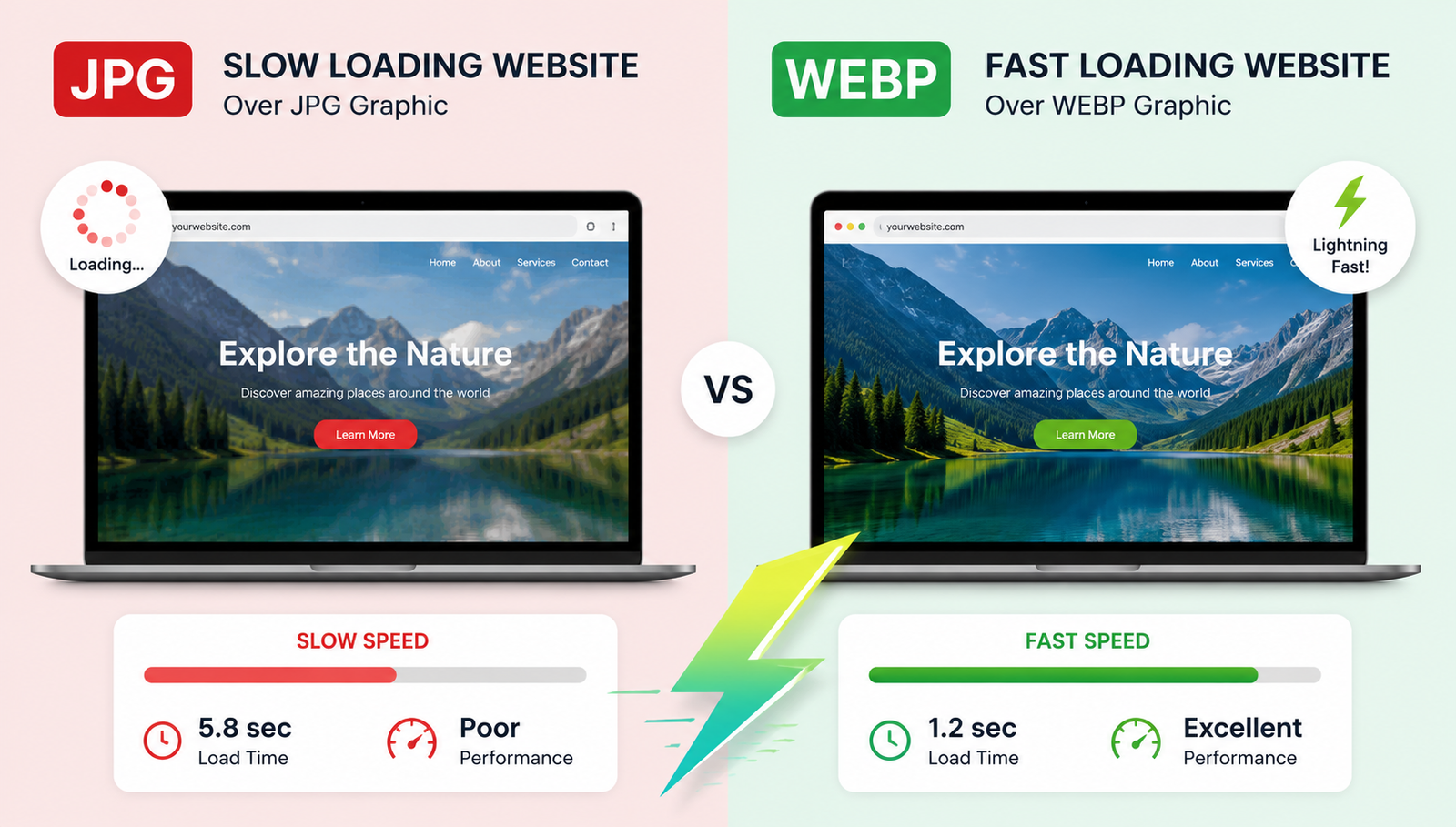
You're building a new e-commerce site. You upload a folder of high-res product photos. Suddenly, your page loads like it's 2005.
Images dictate website speed. The format you choose decides if a customer stays or bounces.
JPG is the old reliable
Everyone knows JPG. It compresses real-world photos efficiently.
It takes a 4 MB picture of a power inverter and crushes it down to 400 KB.
JPG uses lossy compression. The algorithm permanently deletes pixel data to save space. If you edit and save the same file over and over, the image degrades. The edges get crunchy and distorted.
It also lacks transparency. You always get a solid background.
WEBP makes the web faster
Google built WEBP specifically for website performance.
A WEBP file is usually 25 to 30 percent smaller than a JPG of the exact same quality. That size reduction shaves milliseconds off your page load. Faster sites rank higher on search engines.
WEBP supports transparency. You can drop a logo with a clear background over your site's header without paying the massive file size penalty of a PNG.
Nearly every modern browser loads it perfectly.
Make the call
Pick WEBP for your own websites and landing pages. It gives you smaller files, faster load times, and transparent backgrounds.
Keep JPG around for when a specific marketplace or older software refuses to accept WEBP files.
| Feature | JPG | WEBP |
| File size | Small | Extremely small |
| Transparency | No | Yes |
| Primary advantage | Universal compatibility | Website performance |